
"Hainan agriculture"
300 article(s) found

Taiwanese businessmen build Chinese coffee brands in the old revolutionary base areas of the mainland
Huang Wenguang, a Taiwanese businessman in his late sixties, gathered with friends at his coffee sightseeing park. Viewed from the viewing terrace halfway up the hillside, 100 mu of coffee trees planted along the hillside are leafy and green; cups of coffee give off a delicate fragrance at hand. Coffee made in China that is not bitter, sour or astringent can also have such a good quality. Huang Wenguang said that with the development of economy, China

Yunnan coffee has several brands.
Pay close attention to coffee comment (Weixin Official Accounts vdailycom ) and find that Meimei Cafe opens its own small shop. Coffee planting in China is concentrated in Yunnan Province and Hainan Province. Dehong in Yunnan Province has a large output, with an annual output of about 26,000 tons in recent years, accounting for 90% of the national output. Arabica coffee is said to have been introduced by the French seventy or eighty years ago. The dominant variety is Arabica, the so-called small seed.

What are the main diseases of coffee trees | Analysis of the harm of coffee leaf rust to coffee growth
Professional coffee knowledge exchange more coffee bean information please pay attention to coffee workshop (Wechat official account cafe_style) Coffee is a kind of crop, is a popular drink with unique flavor, but as an agricultural product, coffee can not avoid the harm caused by diseases and insect pests-leaf rust

The main characteristics of Yunnan Coffee Flavor the number of manors in the domestic producing areas of Yunnan coffee
Professional coffee knowledge exchange more coffee bean information Please follow the coffee workshop (Wechat official account cafe_style) in recent years, with the increasing demand for coffee at home and abroad, China's coffee industry has also made a new improvement. Perhaps in the eyes of most Chinese, Yunnan has always been the rural land of China or the capital of tea. It also has one of the few in the land of China

The final of the 4th China barista skills Competition was held in Guangzhou.
Professional coffee knowledge exchange more coffee bean information Please follow Coffee Workshop (Wechat official account cafe_style) the fourth China barista skills Competition, the most professional national competition in the domestic coffee industry, was held in Sany International Food City in Guangzhou from the 27th to 28th. Nearly 100 excellent baristas from Hainan, South China, East China and Shandong competed together. Chinese barista
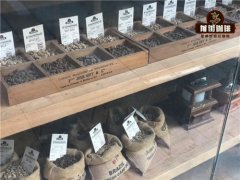
Yunnan Sunshine Katim Coffee beans Flavor characteristics and how to flush? The main coffee growing areas in China?
The typical layout of coffee farms in southwestern Yunnan is 5000 coffee trees per hectare, growing in a sunny plantation style. Catimor is the preferred variety for farmers in the region and has been selected for its low susceptibility to disease and higher and faster yields. Farmers use washing and harvesting methods, which in recent years have included mechanical mucus removers. For a long time, Yunnan, with its fertile plateau,

Coffee: a commodity to be awakened by the Chinese factor
Elegant and romantic Starbucks, mellow cafes. What you may not imagine is that behind the quiet and pleasant scene is the choppy coffee market.

Yunnan Coffee Pu'er Coffee
Pu'er, a heaven-given treasure land, is not only the source of tea in the world, but also an important coffee producing area in China. Both planting area and output account for half of China's coffee, and it is a veritable coffee capital. In recent years, the Pu'er coffee industry has developed rapidly and has formed a complete coffee industry chain from planting to processing. Pu'er coffee has been exported to America, Europe, Asia, etc.

Taiwanese businessmen build Chinese coffee brands in the old revolutionary base areas of the mainland
On a sunny afternoon after the rain, the Nankeng mountain depression along the southeast coast of Fujian was cloudy with green mountains and green waters. Huang Wenguang, a Taiwanese businessman in his late sixties, gathered with friends at his coffee sightseeing park. Viewed from the viewing terrace halfway up the hillside, 100 mu of coffee trees planted along the hillside are leafy and green; cups of coffee give off a delicate fragrance at hand. Not bitter, not sour, not astringent to come out of China
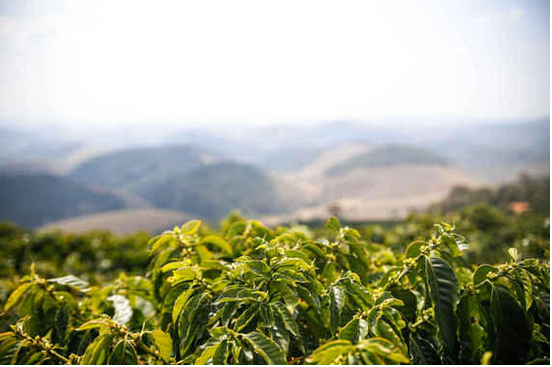
Pu'er Coffee with a sudden rise in China's Coffee Market
Pu'er, a heaven-given treasure land, is not only the source of tea in the world, but also an important coffee producing area in China. Both planting area and output account for half of China's coffee, and it is a veritable coffee capital. In recent years, the Pu'er coffee industry has developed rapidly and has formed a complete coffee industry chain from planting to processing. Pu'er coffee has been exported to America, Europe, Asia, etc. 3

Where is it suitable to grow coffee in China _ is it okay to grow coffee in the north? can coffee be grown in Shandong?
Professional coffee knowledge exchange more information about coffee beans Please note that coffee workshops (Wechat official account cafe_style) are not suitable for growing coffee in all parts of the world. For example, our neighboring Japan, although they have a wealth of coffee-related products, but do not grow coffee in Japan. These countries or regions usually import coffee from the origin of coffee and then produce beans.

The Fifth Fushan Cup International barista Championship starts ceremoniously in 2016.
Riccardo, Consul General of the Consulate General of Colombia in Shanghai. Kalindor. Bueno, Consul General of the Consulate General of Indonesia in Guangzhou and others were invited to the opening ceremony. Yang Sitao, secretary of the Chengmai County CPC Committee, Chen Pinghui, chairman of the standing Committee of the County people's Congress, Wang Yonghe, chairman of the County people's political Consultative Conference, and other county leaders attended. Zheng Fangping, member of the standing Committee of Chengmai County Party Committee and Executive Deputy County Mayor, represented the county party committee and county government to participate in the Fushan coffee cup champion.

What is the roasting degree of Mexican coffee beans? will Mexican coffee beans be sour when roasted lightly?
For more information about coffee beans, please follow the Coffee Workshop (official Wechat account cafe_style) through the Mexican Agriculture, Animal Husbandry, Rural Development, Fisheries and Food (SAGARPA) Secretariat, the International Coffee Expo takes place in Beijing, China, of which the 2018 edition is a special guest gathering of 360 exhibitors and more than 70, 000 visitors. this

Boutique coffee from Central America the first Nicaraguan coffee estate opened by Taiwanese in Central America
Professional barista communication Please follow the coffee workshop (Wechat official account cafe_style) because he likes drinking coffee and is interested in agriculture, so he bought a coffee farm; because he grows good coffee in Nicaragua, he introduces good coffee to Taiwan. The story of Anjing Manor Coffee Farm sounds incredible. Dr. Chen Ruoyu and Dr. Yang Ziqing used Taiwan's agricultural biotechnology.

The introduction of Ruili Jingpo Nongxian coffee was recorded in 1914.
In April 1996, compiled by the compilation Committee of Ruili City Chronicles of Yunnan Province, the fifth coffee section on page 383 of Ruili City Chronicles published by Sichuan Dictionary Publishing House recorded that as early as 1914, the Jingpo nationality had been introduced from Myanmar to Nongxian Township for cultivation. The local series of books of the people's Republic of China, Records of Yunnan Province, Volume 39, Records of Land Reclamation, Chapter 3, Section 2, Coffee is recorded: the cultivation of coffee in China began in 1884.

History of introduction and expansion of Coffee in early China (1)
1. The introduction of Ruili Jingpo Nongxian Coffee was recorded in 1914. In April 1996, it was compiled by the compilation Committee of Ruili City Chronicles of Yunnan Province. The fifth coffee section on page 383 of Ruili City Chronicles published by Sichuan Dictionary Publishing House recorded that as early as 1914, the Jingpo people have been introduced from Myanmar to Nongxian Township for cultivation. Yunnan Provincial Chronicles, Volume 39, Chapter 3 of the Local Series of the people's Republic of China
The History of Coffee introduction and expansion in China in the early stage (1)
1. The introduction of Ruili Jingpo Nongxian Coffee was recorded in 1914. In April 1996, it was compiled by the compilation Committee of Ruili City Chronicles of Yunnan Province. The fifth coffee section on page 383 of Ruili City Chronicles published by Sichuan Dictionary Publishing House recorded that as early as 1914, the Jingpo people have been introduced from Myanmar to Nongxian Township for cultivation. Yunnan Provincial Chronicles, Volume 39, Chapter 3 of the Local Series of the people's Republic of China

China's coffee consumption has grown at an annual rate of 20%-much higher than the global growth rate of 2%.
In 2008, Huang Wenguang chose to enter Nankeng Reclamation Coffee Manor in Zhangzhou, Fujian Province, and began to grow local coffee. In his view, coffee is squeezing into the Chinese market, which is dominated by tea culture, and if coffee is to be truly successful in China, there must be a coffee bean that is more suitable for the Chinese population, and a local coffee brand with more Chinese characteristics is needed, on the one hand, the market demand for

History of introduction and expansion of Coffee in China in the early stage of Coffee Development (1)
1. The introduction of Ruili Jingpo Nongxian Coffee was recorded in 1914. In April 1996, it was compiled by the compilation Committee of Ruili City Chronicles of Yunnan Province. The fifth coffee section on page 383 of Ruili City Chronicles published by Sichuan Dictionary Publishing House recorded that as early as 1914, the Jingpo people have been introduced from Myanmar to Nongxian Township for cultivation. Yunnan Provincial Chronicles, Volume 39, Chapter 3 of the Local Series of the people's Republic of China
Major producing countries and their famous coffee bean producing areas
Latin America (Central and South America) Brazil: Santos, Bahia, Cerrado, Mogiana Mexico: Coatepec, Huatusco, Orizaba, Maragogype, Tapanchula, Huixtla, Plumakois